

Guest Voice · Water, Landscape & Stewardship
Honeybees and the Cost of Good Intentions
By Gary Kurtz · August 11, 2026
We have spent decades celebrating the honeybee as a symbol of environmental virtue. But honeybees are not native to North America — and their overwhelming presence may be quietly crowding out the wild bees that our ecosystems actually depend on.
For decades, the honeybee has served as the face of pollinator conservation. "Save the bees" campaigns, backyard hive installations, and corporate sustainability pledges have made the honeybee a symbol of environmental virtue. But there is a problem with this story: honeybees are not native to North America. They were introduced from Europe in the early 1600s, and their overwhelming presence in our landscapes today may be doing more harm than good to the wild pollinators our ecosystems actually depend on.
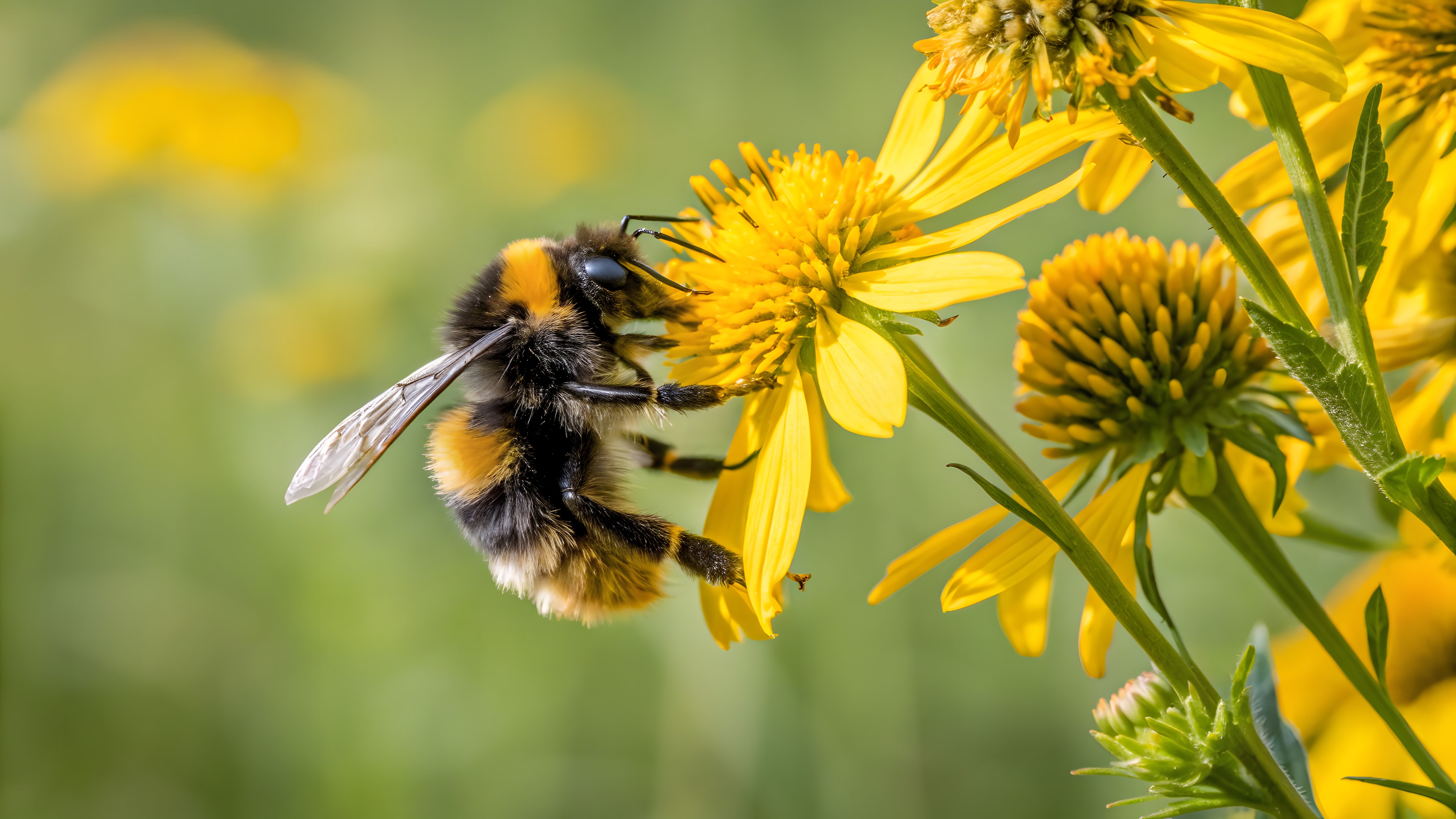
North America is home to more than 4,000 species of native bees — bumble bees, mason bees, sweat bees, leafcutter bees, mining bees, and hundreds of others. These bees evolved alongside native plants over millions of years, developing specialized relationships that honeybees cannot replicate. Some native plants can only be pollinated by specific native bee species. The relationship between a particular squash bee and its host plant, or between a specialist mining bee and a single genus of wildflower, represents an ecological contract written over deep time. Honeybees, generalists that they are, cannot honor those contracts.
The Competition Problem
A single managed honeybee colony can contain 50,000 to 80,000 individuals. A bumble bee colony, by contrast, might have a few hundred. When a beekeeper installs hives in or near natural areas, the foraging pressure on local flowers can be enormous. Studies in Europe, Australia, and increasingly in North America have documented significant declines in native bee diversity and abundance in areas with high densities of managed honeybee colonies. The mechanism is straightforward: honeybees are extraordinarily efficient foragers, and they can deplete floral resources before native bees — which are often slower to emerge in spring and more specialized in their foraging — have a chance to access them.
This is not an argument against beekeeping. Managed honeybees play an important role in agricultural pollination, and beekeeping has genuine cultural and economic value. But the placement of hives matters enormously. Hives installed in urban gardens, on rooftops, or near agricultural fields are very different from hives installed adjacent to remnant prairies, oak savannas, or other natural areas where native bee communities are trying to survive. The conservation community has been slow to make this distinction, in part because the "save the bees" narrative has made honeybees a fundraising asset rather than a subject of critical scrutiny.
What We Should Be Doing Instead
The most effective thing most people can do for pollinators is not install a honeybee hive. It is to plant native flowers — and lots of them. A yard or garden with a diverse palette of native plants blooming from early spring through late fall provides food and nesting habitat for dozens of native bee species. It requires no management, no equipment, and no ongoing inputs beyond the initial planting. It is, in almost every respect, a more ecologically valuable act than keeping honeybees.
Nesting habitat matters as much as food. About 70 percent of native bee species nest in the ground, in bare or sparsely vegetated soil. The remaining 30 percent nest in hollow stems, pithy stems, or wood cavities. A landscape that is entirely mulched, mowed, or paved offers no nesting opportunities regardless of how many flowers it contains. Leaving patches of bare ground, allowing dead stems to stand through winter, and tolerating a degree of "messiness" in the garden are among the most important things a landowner can do for native bees.
The Deeper Issue
The honeybee story is a useful lens for examining a broader pattern in conservation: the tendency to focus on charismatic, familiar, or commercially useful species at the expense of the less visible ecological relationships that actually sustain ecosystems. Honeybees are easy to love. They produce honey. They have a long cultural history. They are, in the language of conservation marketing, a "gateway species" — a way of getting people interested in pollinators more broadly.
But conservation that is driven primarily by what is easy to love tends to misallocate resources. The native bees that are most ecologically important are often the least charismatic — small, solitary, and difficult to distinguish from one another without a microscope. They do not produce honey. They do not have a cultural mythology. They are, in the most literal sense, invisible to most people. And yet they are the foundation of the pollination services that native plant communities depend on, and by extension, the foundation of the food webs that support birds, mammals, and ultimately, us.
Good intentions are not enough. The history of conservation is full of well-meaning interventions that caused harm — introduced species that became invasive, habitat "improvements" that disrupted ecological processes, fundraising narratives that simplified complex problems into solvable-sounding campaigns. The honeybee story is another chapter in that history. Recognizing it as such is not a reason for despair. It is an invitation to look more carefully, to ask harder questions, and to let the actual ecology of a place guide our actions rather than the stories we find most comfortable to tell.
Takeaway
Honeybees are not the villains of this story — but they are not the heroes either. The native bees that our ecosystems depend on need habitat, not hives. The most powerful thing most of us can do is plant native flowers, leave nesting habitat, and resist the urge to simplify a complex ecological story into a feel-good campaign.
What you can do
- →Replace lawn or mulched areas with native flowering plants that bloom across the full growing season.
- →Leave patches of bare ground and standing dead stems through winter to support ground-nesting and stem-nesting native bees.
- →If you keep or are considering keeping honeybees, site hives away from remnant natural areas and native plant communities.
Related reading
- Why Everyone Is Talking About "Wilding" — On the broader movement to restore ecological function to working landscapes.
- Designing with Native Plants: Beyond the Trend — On the ecological relationships that make native plant design more than an aesthetic choice.
- The Bees in Your Backyard — Joseph Wilson & Olivia Messinger Carril — The definitive field guide to North American native bees — accessible, beautifully illustrated, and genuinely eye-opening.